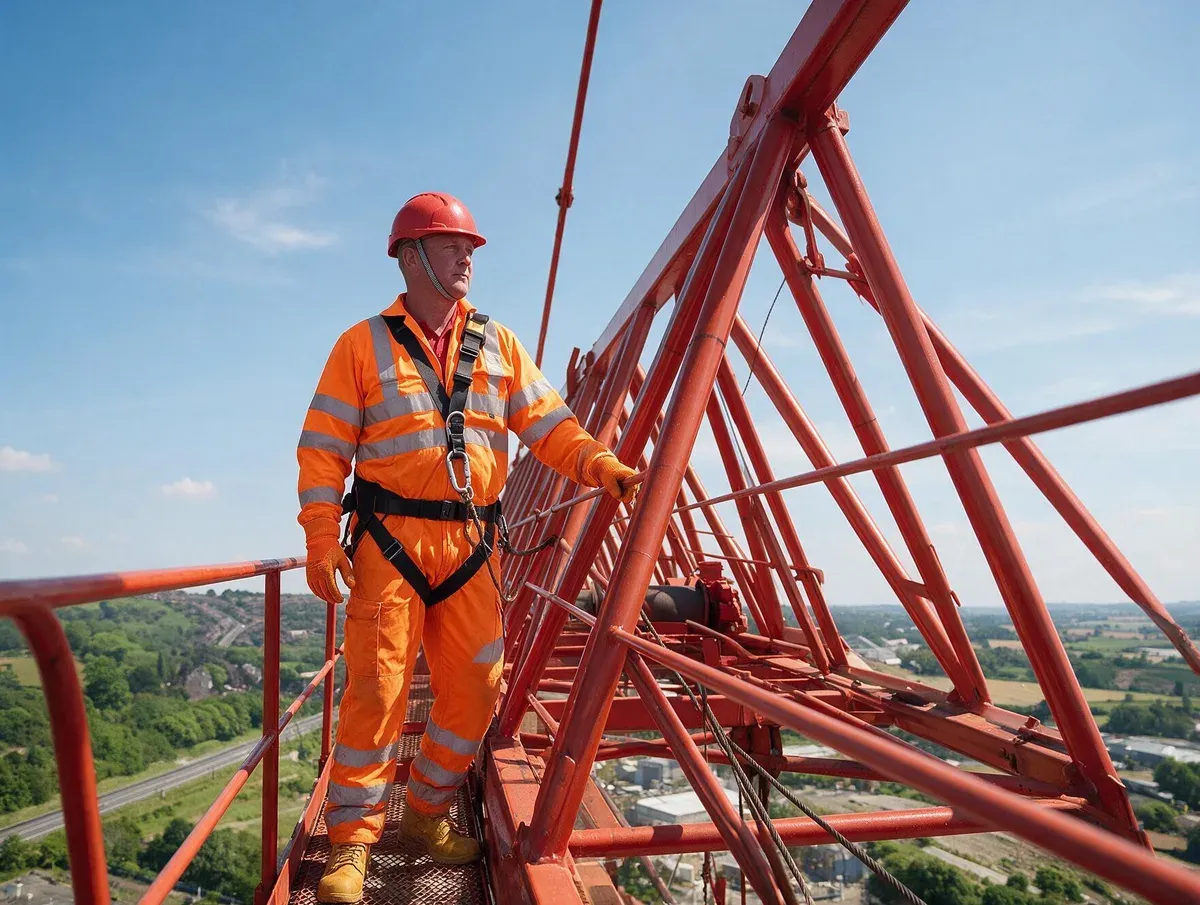
Quick answer: RIIWHS204E is the national Work safely at heights unit used in the Northern Territory. NT WorkSafe publishes an approved Managing the risk of falls at workplaces Code of Practice under the Territory’s WHS legislation. Training evidence and the workplace’s fall controls need to be considered separately.
What is the RIIWHS204E course in the Northern Territory?
RIIWHS204E Work safely at heights covers planning the work, identifying hazards and controls, selecting and checking equipment, safely performing work at height and completing the task.
It is a national unit of competency, not a separate Northern Territory high risk work licence. A competent learner normally receives a statement of attainment from the RTO. “Working at heights ticket” is informal language for evidence of training or competency.
Territory WHS duties, employer procedures, site inductions, equipment requirements and emergency plans still apply after training.
The Northern Territory’s approved falls code
NT WorkSafe says its Managing the risk of falls at workplaces document is an approved code of practice under section 274 of the Work Health and Safety (National Uniform Legislation) Act 2011.
The regulator explains that an approved code provides practical guidance for achieving the standards required under the WHS Act and Regulations and for identifying and managing risks.
The code should be read with the current Territory legislation, any industry requirements and the procedures applying to the actual site.
Planning fall controls for NT workplaces
A safe system should begin by considering whether the need to work at height can be eliminated. Where the work cannot be done from the ground or a solid construction, the control needs to suit the edge, surface, access method, equipment and possible consequences of a fall.
Higher-order physical controls should be considered before relying on administrative procedures or personal protective equipment alone. Where a fall-arrest system is used, the workplace also needs suitable emergency and rescue arrangements.
Training helps workers understand and use the system, but it does not make an unsuitable access method or uncontrolled edge safe.
Construction work and site documentation
High-risk construction work can require a safe work method statement under Territory WHS requirements. The exact requirement depends on the task and current regulations.
Confirm the prescribed category with the employer, principal contractor or NT WorkSafe. Where a SWMS is required, it should describe the actual work, hazards and controls and be reviewed when conditions change.
Fall risks still need to be managed even where a particular construction threshold is not reached.
Course evidence and currency in the NT
RIIWHS204E does not set one Northern Territory expiry period.
Employers, resources projects, contractors and sites may require recent evidence, a refresher, verification of current competency or equipment-specific instruction. Remote work and project mobilisation can also involve separate inductions and documentation.
Ask the organisation requiring the training what evidence it accepts before enrolling.
Working at heights courses in Darwin, Alice Springs and regional NT
The national unit is unchanged between Darwin, Palmerston, Alice Springs and regional or remote locations. Delivery schedules and facilities are provider-specific.
Before booking, confirm:
- the provider is a current RTO
- RIIWHS204E appears on its current scope
- the exact venue, date and delivery mode
- how practical training and assessment are completed
- whether the course context suits the intended industry and work
- fees, identification, clothing and PPE requirements
- the evidence issued after successful assessment
For regional or remote work, also confirm travel, accommodation and employer mobilisation requirements separately.
Training Connect does not infer Darwin or regional availability from an RTO’s national registration. Ask the provider to confirm the location and current places.
How to verify an NT course provider
Use training.gov.au to check the RTO’s legal identity, registration status and current scope.
RIIWHS204E requires practical performance on at least two occasions. If theory is offered online, ask where and how the supervised practical training and assessment will occur.
Use the national guide for broader course duration, ticket terminology and validity questions.